Meet the DAMP Lab: Scaling Science Through Automation
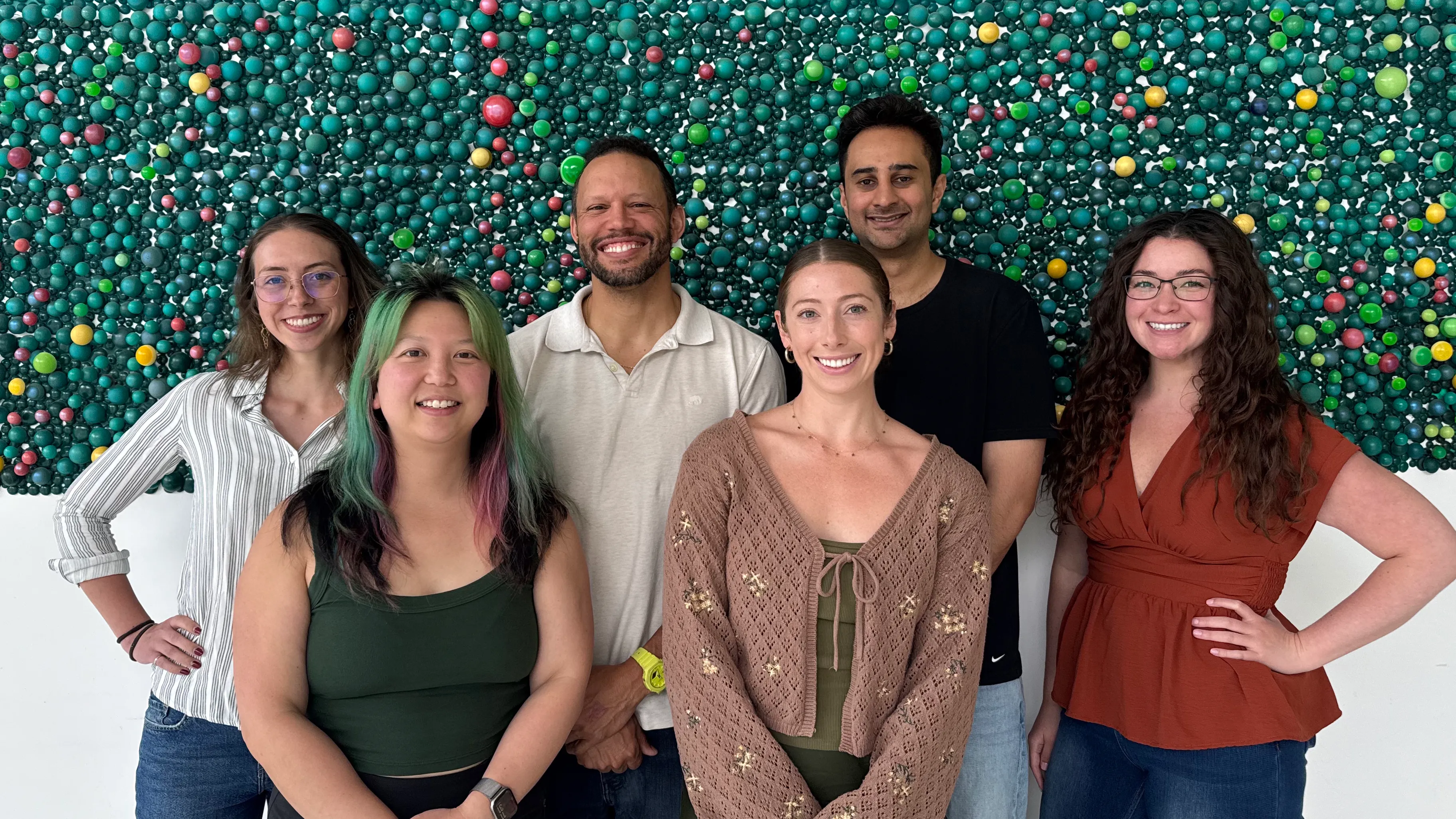
Kristen Sheldon, Asad Malik, Molly Brennan.
What do Corals, Robots and NGS have in common?
Quite a lot, if you ask the DAMP Lab. From automated library preparation to sequencing everything from coral fragments to deep-sea hydrothermal vent soil, this Boston University core facility is helping researchers scale complex workflows while maintaining reproducible results. Learn what's next for the team and why NEBNext UltraExpress® DNA Library Prep has earned a place on their automation platform.
An Interview with the DAMP Lab
What parent institution is the DAMP Lab associated with?
DAMP Lab is an academic core facility operating out of Boston University.
Who does the DAMP Lab serve?
Our clients span a wide range of sectors and stages of development, from early-stage biotechnology startups and established companies to academic research laboratories, government organizations, and nonprofit institutions. We work with investigators who need scalable, high-throughput workflows, as well as teams tackling highly specialized research challenges that require custom solutions. Our current expertise focuses on bridging disciplines among automation, molecular biology, synthetic biology, next-generation sequencing, and laboratory workflow development.
How many people make up the DAMP Lab team?
Our core team includes our Founder & Director, Douglas Densmore, and our Research Director, Catherine Klapperich, along with a dedicated group of full-time staff. This staff team is composed of Laboratory Technicians, Automation Engineers, and Software Engineers who support the development, execution, and scaling of our research and service workflows. In addition to our full-time personnel, we maintain a strong and dynamic training/education component. During the academic year, we mentor undergraduate student researchers who contribute to ongoing projects on a part-time basis. In the summer, we expand this program to include full-time undergraduate interns, many of whom continue their involvement during the school year. Each semester, we also welcome a cohort of student volunteers who gain hands-on experience while collaborating on active research and engineering efforts within the lab.
What technologies or workflows does the DAMP Lab specialize in?
In total, we support 57 bio-cloud operations spanning a wide range of molecular biology and bioengineering workflows. Our capabilities include foundational techniques such as DNA cloning and plasmid construction, as well as advanced applications like next-generation sequencing (NGS) library preparation and Illumina sequencing. A core focus of the lab is the design and implementation of automated and semi-automated workflow using liquid handlers. We leverage laboratory robotics, custom software tools, and integrated data pipelines to streamline experimental processes while improving reproducibility alongside throughput. This allows us to support both high-volume service work and the development of novel experimental methods across diverse research projects alongside our collaborators.
What sequencing platforms does the DAMP Lab operate?
We operate the Illumina NextSeq 2000 for all of our sequencing workflows. This platform provides a flexible and high-throughput solution for a wide range of applications and integrates seamlessly with our internal library preparation processes.
What automation platforms does the DAMP Lab employ?
Automation is central to our approach, and our platform suite reflects that focus. We utilize the Hamilton Microlab STAR system alongside Opentrons Flex and OT-2 platforms, providing a versatile range of liquid-handling capabilities. Together, these systems allow us to support both high-throughput, production-scale workflows and smaller, modular setups optimized for rapid protocol development and iteration. This flexibility enables us to design, test, and deploy automated methods across a broad spectrum of molecular biology and sequencing applications.
What are the biggest challenges you face as a core laboratory today?
One of our primary challenges is visibility. Core facilities across the country are generating impactful, high-quality science, but they are often underutilized simply because researchers are not always aware of the services and capabilities available to them. As a result, consistently engaging with the right audiences and communicating our offerings remains an ongoing effort.
A second, more systemic challenge is the lack of a unified ontology across core laboratories. Without shared standards for describing methodologies and generated data, it becomes more difficult to compare capabilities or benchmark performance across facilities. Developing more consistent frameworks for communication and data organization would significantly strengthen interoperability within the core ecosystem, and we are actively working to contribute to that effort through the development of standardized, cloud-based laboratory operations.
What is the DAMP Lab's favorite NEBNext product?
The NEBNext UltraExpress DNA Library Prep Kit is a clear favorite in our lab for good reason. We've implemented it in an automated workflow on our Hamilton Microlab STAR, where it performs consistently across a wide range of sample types and input qualities. For a core facility working with everything from coral fragments to deep-sea hydrothermal vent soil, that level of robustness and reliability is essential. It allows us to maintain reproducibility even as sample diversity increases across projects.
What excites you about the future of sequencing / are there new capabilities or services the DAMP Lab is excited to expand into?
One area we are particularly excited about is the continued expansion of both transcriptomic and epigenetic sequencing capabilities, especially DNA methylation profiling. Advances in chemistries such as enzymatic methylation sequencing (EM-seq) are making these workflows faster, more streamlined, and increasingly compatible with low-input and challenging sample types.
These improvements open the door to research questions that were previously difficult to address at scale, and we are looking forward to exploring how to bring these workflows into our core service offerings. In parallel, we are especially interested in developing and optimizing automated methods for these protocols, with the goal of making epigenetic sequencing more accessible and scalable for our collaborators.
What is the DAMP lab's favorite non-work outing?
Boston offers no shortage of great activities, so it's hard to choose just one favorite. That said, as a lab, we especially enjoy candlepin bowling at Lucky Strike. It strikes the right balance of relaxed, friendly competition and social time outside the lab.
Visit the DAMP Lab: https://www.damplab.org.